Impact of Dirty Windows: Light Transmission, Energy & Health
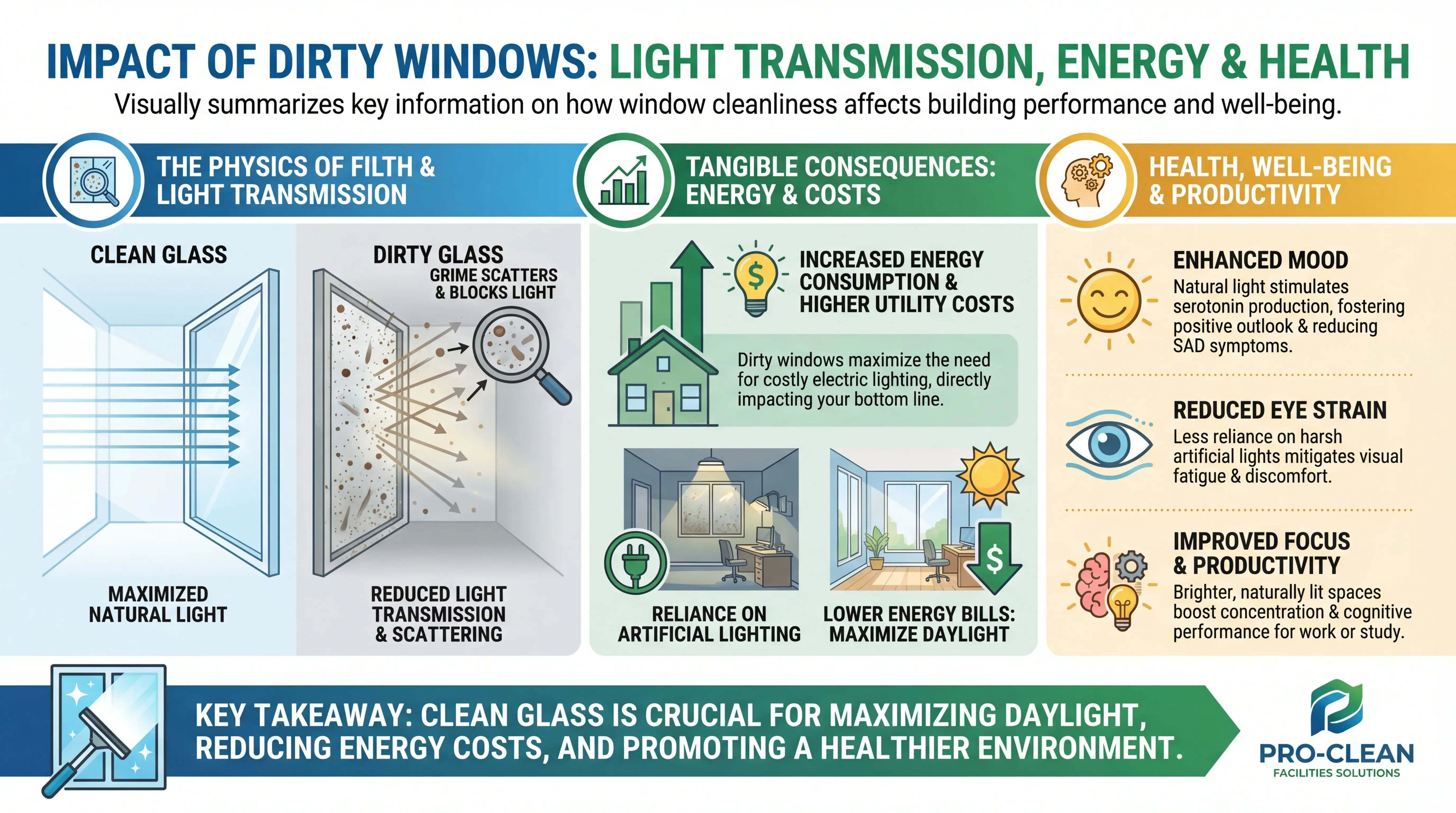
Dirty windows drastically reduce natural light, affecting energy use and well-being. Microscopic grime scatters light, diminishing indoor brightness and visual clarity. Understanding this physics highlights the crucial need for clean glass.
Ready to transform your property?
Get a free, no-obligation quote tailored to your needs.
The Hidden Science of Dirty Windows: Impact on Light, Energy, and Well-being
In our bustling daily lives, it's easy to overlook the subtle yet significant impact of seemingly minor details. The cleanliness of our glass surfaces—be it windows, skylights, or glass facades—is one such detail. While a streak-free window undeniably offers a more aesthetically pleasing view, the **scientific implications of dirty glass on light transmission** are profound. This isn't just about appearances; it affects everything from our home's energy consumption to our personal well-being. Understanding how common grime interacts with light reveals a fascinating interplay of physics and practical consequences that underscore the critical importance of maintaining crystal-clear windows.
The Physics of Filth: How Dirty Windows Block Natural Light
Light, the fundamental element of vision and natural illumination, travels in waves. When these light waves encounter a surface, they can be reflected, absorbed, or transmitted. For transparent materials like glass, efficient **light transmission** is paramount, allowing us to see clearly and harness the invaluable benefits of **natural daylight** indoors.
Understanding Light Transmission and Scattering in Glass
Clean glass is engineered to permit maximum light transmission with minimal distortion. Its smooth, uniform surface and specific refractive index efficiently guide light, ensuring that objects viewed through it appear crisp, vibrant, and brightly lit. This optimal pathway for light contributes significantly to the illumination and ambiance of our indoor spaces, maximizing the benefits of **natural light penetration**.
However, when the glass surface is compromised by contaminants, this ideal transmission is severely disrupted. The very properties that make glass transparent become less effective, altering both the quantity and quality of light that passes into a space, thereby affecting overall visibility and the bright, airy ambiance we desire.
The Microscopic Impact of Window Grime and Contaminants
What we commonly perceive as "dirt" on glass is actually a complex amalgamation of various microscopic particles: dust, pollen, exhaust fumes, mineral deposits from rain or sprinklers, and organic residues. These tiny particles create an irregular, textured layer on the otherwise pristine surface, drastically changing how light behaves upon impact with your **dirty windows**.
When light strikes this uneven layer, instead of passing straight through, it is scattered in multiple directions. This phenomenon, known as diffuse reflection and scattering, significantly reduces the amount of direct, useful light entering a room. Consequently, spaces appear dimmer, hazier, and less inviting. The cumulative effect of these tiny obstructions on your **window glass** can drastically diminish overall brightness and **visual clarity**.
Glass Condition | Light Transmission Efficiency | Visual Clarity | ||||
|---|---|---|---|---|---|---|
Pristine, Clean Windows | Up to 90% direct **natural light transmission** | Sharp, high contrast, vivid colors, excellent **visual clarity** | ||||
Moderately Soiled Glass | 50-70% scattered light transmission | Noticeably hazy, reduced contrast, slightly muted tones, diminished **visual clarity** | ||||
Heavily Grimy Glass (Dirty Windows) | Less than 50% diffused transmission, significantly reduced **daylight penetration** | Significantly obscured, poor visibility, distorted colors, poor **visual clarity** | ||||
Tangible Consequences of Dirty Glass: Energy, Health & Productivity
The impact of **dirty windows** extends far beyond mere visual appeal, influencing critical practical aspects of our daily lives, from utility costs to personal comfort and overall well-being. Reduced **light transmission** from grimy glass creates a ripple effect that touches multiple important domains.
Increased Energy Consumption and Higher Utility Costs
A direct and undeniable consequence of diminished **natural light** is an increased reliance on artificial illumination. In both residential homes and commercial buildings, lights are often switched on earlier in the day and kept on for longer durations to compensate for the lack of incoming daylight through **dirty windows**.
This heightened dependency on electric lighting directly translates into higher energy bills. Studies consistently indicate that even a moderate layer of dirt can decrease **light transmission** by 20-30%. This leads to a measurable increase in electricity consumption and operational costs over time. Prioritizing **clean windows** is a key, often overlooked, strategy for enhancing **energy efficiency** and achieving significant cost savings.
Impact on Human Well-being, Mood, and Productivity
Access to abundant **natural light** is not merely a preference; it is a critical factor for human health, mood, and cognitive function. Dim, artificially lit, or gloomy environments, often caused by **streaky windows**, can contribute to visual fatigue, headaches, and even disrupt our natural circadian rhythms, negatively impacting sleep quality.
In workplaces, schools, and even home offices, insufficient natural light has been consistently linked to decreased productivity, lower morale among occupants, and an increase in reported discomfort. **Professionally cleaned windows** facilitate better views, reduce eye strain, and contribute to a more pleasant, stimulating, and healthy indoor environment, ultimately boosting overall well-being and concentration.
Enhanced Mood: Natural light stimulates serotonin production, fostering a more positive outlook and reducing symptoms of seasonal affective disorder (SAD).
Reduced Eye Strain: Less reliance on harsh artificial lights, thanks to ample natural illumination, helps mitigate visual fatigue and discomfort.
Improved Focus: A brighter, naturally lit space can significantly boost concentration, cognitive performance, and overall alertness, making it ideal for work or study.
Lower Energy Bills: Maximizing daylight penetration through **clean windows** minimizes the need for costly electric lighting, directly impacting your bottom line.
Better Aesthetics: **Clean glass** instantly elevates the interior and exterior appearance of any building, projecting professionalism and care for commercial properties, and enhancing curb appeal for homes.
Unseen Dangers: Environmental Health and Glass Longevity
Beyond immediate clarity and energy concerns, the accumulation of dirt on glass can harbor other less obvious but equally significant issues, touching upon indoor environmental quality and the long-term integrity of your valuable glass assets.
Impact on Indoor Air Quality and Potential Material Degradation
While glass inherently offers some protection against UV radiation, a persistent layer of dirt does not enhance this. Instead, accumulated grime on your **dirty windows** can trap various airborne pollutants, including allergens (like pollen and pet dander), dust mites, mold spores, and harmful chemicals, directly against the window surface.
These trapped particles can significantly contribute to poorer **indoor air quality**, especially when windows are opened. Air currents can stir them up and introduce them into the living or working space, triggering allergies and respiratory issues. This accumulation can also facilitate the growth of microorganisms, further impacting hygiene and creating an unhealthy environment.
Protecting the Long-Term Integrity and Lifespan of Your Glass Surfaces
The type of dirt and its composition significantly impact the longevity of your glass. Certain contaminants, particularly industrial pollutants, bird droppings, or stubborn **hard water mineral deposits**, contain corrosive elements. When left untreated on your windows, these substances can slowly etch into the glass surface, causing permanent damage, pitting, and irreparable stains that even intensive cleaning cannot remove.
Furthermore, moisture trapped beneath layers of dirt can accelerate this degradation process, fostering the growth of algae or fungi that embed themselves into microscopic imperfections. This not only makes future **window cleaning** increasingly difficult but can also compromise the structural integrity and aesthetic lifespan of the window itself. Regular, professional **glass maintenance** is crucial for preserving your investment.
Dr. Eleanor Vance, an environmental physicist, emphasizes, "The impact of dirty glass extends far beyond a mere aesthetic inconvenience. It's a subtle but significant factor affecting our energy consumption, personal well-being, and even the long-term integrity of our built environments. Investing in **professional window cleaning** is an investment in a healthier, more efficient space."
The science is clear: **dirty glass** is far more than just an eyesore; it's a measurable impediment to efficiency, health, and visual quality. By understanding how light interacts with grime, we can truly appreciate the profound benefits of maintaining **clean glass surfaces**. From reducing energy costs and enhancing productivity to fostering a healthier indoor environment and preserving the lifespan of your windows, the simple act of **cleaning windows** offers a multitude of advantages that contribute positively to both our immediate surroundings and our long-term well-being. For optimal results and lasting clarity, consider regular **professional window cleaning services**.
Ready to get started?
Contact our team today for a free, no-obligation consultation.